The Importance of Metal Machining Services in Thailand’s Industrial Sector
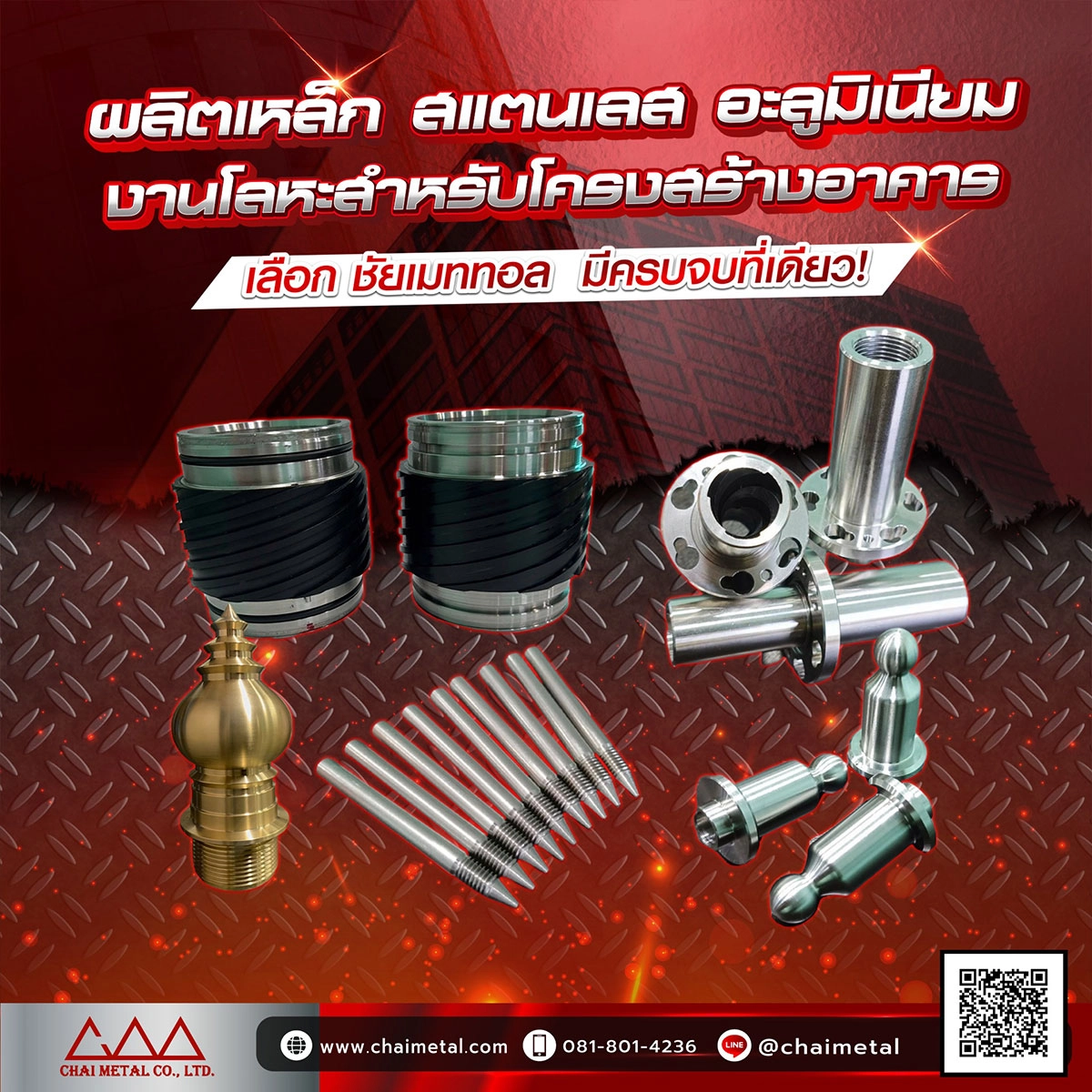
Metal machining services play a vital role in the development of Thailand’s manufacturing industry. With modern metal machining technologies, manufacturers are able to produce components with high complexity and precision to meet specific customer requirements. The continuous growth of the automotive, electronics, and machinery industries in Thailand has driven a steadily increasing demand for high-quality metal machining services.
Thai metal machining service providers have continuously enhanced their production capabilities through investment in advanced machinery, skill development of machinists, and quality control in line with international standards. As a result, Thailand’s metal machining services are well positioned to meet the needs of both domestic and international customers with reliability and high quality.


Types of Metal Machining Services and Their Applications
Metal machining services can be categorized into several types based on customer requirements and the characteristics of the workpieces, as follows:
General Turning
General turning is a basic machining process that most metal machining service providers can perform, such as dimension adjustment, taper turning, grooving, and thread turning. This type of work is commonly used to produce standard components that do not require high complexity.
Precision Turning
Precision turning requires high accuracy and high-quality machinery. Service providers specializing in precision machining can produce parts with very tight tolerances, making this process ideal for components that demand exceptional accuracy, such as high-precision machinery parts, medical devices, and aerospace components.
Custom Turning
Metal machining providers offering custom turning can manufacture parts according to customer-supplied drawings, whether 2D drawings or 3D models. This service is suitable for customers who require specialized components that are not commercially available.
CNC Turning
CNC turning utilizes computer-controlled lathes. Providers equipped with CNC machines can manufacture complex components with high precision and consistent quality, making this process ideal for large-volume production where uniformity is essential.
Key Factors in Choosing a Metal Machining Service Provider
Selecting the right metal machining service provider significantly impacts product quality and customer satisfaction. Important factors to consider include:
Experience and Expertise
Experienced providers can offer valuable technical advice, efficiently resolve potential issues, and produce components that meet exact requirements. Consider the provider’s track record, past projects, and ability to work with various materials.
Machinery and Technology
Modern and diverse machinery is crucial for high-quality production. Providers equipped with advanced machines—such as multi-axis CNC lathes—can handle complex jobs with superior precision.
Quality and Production Standards
Strong quality control systems and certifications such as ISO 9001 reflect a commitment to high manufacturing standards. Effective quality management ensures that finished products meet specified requirements.
One-Stop Service Capability
Providers offering end-to-end services—from design and production to surface finishing and assembly—help reduce coordination complexity and improve overall efficiency.
Pricing and Service Conditions
While pricing is important, it should not be the sole deciding factor. Costs should be evaluated alongside quality and service value. Additional considerations include lead time, payment terms, and quality guarantees.
Process of Using Metal Machining Services
Consultation and Requirement Definition
The first step is consulting with the service provider to define requirements such as material selection, dimensions, geometry, tolerance levels, and production volume. Clear information helps ensure accurate cost and lead-time estimates.
Design and Prototyping
If a finalized design is not available, the provider may assist with design development or optimization. In some cases, a prototype or sample may be produced for verification before mass production.
Production and Quality Control
Once specifications and pricing are confirmed, production begins. Quality control is conducted at every stage to ensure compliance with agreed standards.
Delivery and Warranty
Upon completion, parts are delivered along with relevant documentation, such as inspection reports or quality certificates. Reliable providers offer quality warranties and corrective support if manufacturing-related issues arise.
Trends in the Metal Machining Industry
Adoption of Digital Technologies
Leading providers are integrating digital technologies, including manufacturing simulation and big data analytics, to improve production efficiency and quality.
Integration with Additive Manufacturing
Although machining is a subtractive manufacturing process, many providers are now combining it with additive manufacturing technologies, such as 3D printing, to enable the production of highly complex components.
Machining of Advanced and Hard Materials
Modern machining technologies allow providers to work with advanced materials, including special alloys (superalloys) and ceramics, which are increasingly demanded in industries such as electric vehicles and aerospace.
Conclusion
Metal machining services play a crucial role in the advancement of Thailand’s manufacturing sector. With modern technology and skilled machinists, Thai machining services are capable of meeting the needs of both domestic and international markets.
Choosing the right metal machining provider is essential to achieving high-quality results and customer satisfaction. Key considerations include experience, technology, quality standards, one-stop service capability, and pricing conditions.
Industry trends indicate continuous innovation and adaptation to changing demands. Thai metal machining providers must stay aligned with these trends to maintain competitiveness in the global market.